The room from the homepage, with a small game controller on the desk.
06 · Team game · a private course repo
DoodleJump,butyouclimbtofortune.
A class project from fall 2025: four of us, one shared Java codebase, a Doodle Jump of our own.
Team game
Atitlescreen,thenyoustartclimbing.
WUMPUS
RISE TO FORTUNE
PRIVATE REPO · TEAM OF FOUR
PRESS START
Wumpus: Rise to Fortune, our own take on Doodle Jump, built in Java for COMP 55
Jump.Bounce.Grabcoins.Keepclimbing.
An auto-playing demo built from the game’s own sprites: a small robot jumps from platform to platform, gets extra height off a trampoline, and reaches for a coin near the top.
a demo climb built from the game's real sprites. The trampoline sends you higher than a plain platform does
Inventoryandjetpack:mine.Shop:hookedup.
INVENTORY + HUD
3 slots · Inventory.java, HUD.java
SHOP
5 coins
wired to coins + jetpacks (Shop.java, teammate’s base)
JETPACK
lift 14fuel 100
Jetpack.java
the shop screen was a teammate's; my commit hooked it up to real coins and more than one jetpack
Fourpeople.OnesharedJavacodebase.
55me
34me
27me
22me
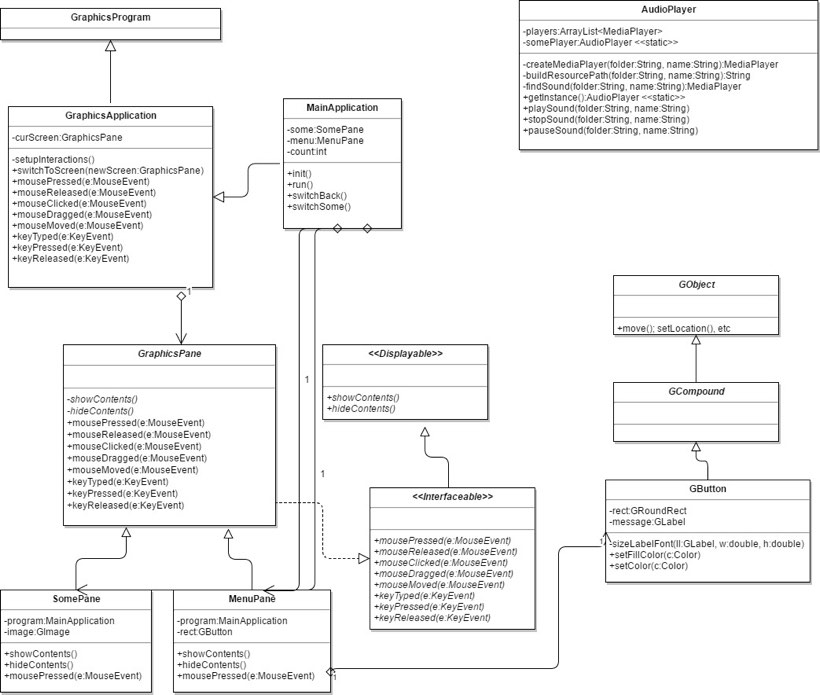
FIG 6.1 · the team’s own UML class diagram, the shared blueprint four of us built from
one repo, one main branch, everyone pushing to it. 22 of the team's 138 commits are mine (55 / 34 / 27 / 22, counted 22 Sep 2026)
Coinandjetpackshareonebaseclass.
Item
Coin
Jetpack
in code, a coin and a jetpack are both 'items' built on one shared blueprint, so every new pickup plugs into the same pickUp() slot (Interfaces/Interaction.java, interact/Item.java)
A private course repo, four people, one Java codebase.
Wumpus: Rise to Fortune, a COMP 55 (fall 2025) final project, GitHub Classroom, fork of a shared starter.
github.com/comp55/final-project-wumpusprivate course repo, a team course project, not hyperlinked
One shared item base.
CODE 6.1Util/ItemGenerator.java:1-22
publicclass ItemGenerator {
public ItemGenerator() {}
publicstatic Coin createCoin(int x, int y, int w, int h, int val) {
System.out.println("Coin Created at " + x + " " + y);
returnnew Coin(x, y, w, h, val);
}
publicstatic Jetpack createJetpack(int x, int y, int w, int h) {
System.out.println("Jetpack Created at " + x + " " + y);
Jetpack jet = new Jetpack(x, y, w, h);
jet.create(x, y, w, h);
return jet;
}
}
Coin and Jetpack are both just an Item underneath (Interfaces/Interaction.java + the abstract interact/Item.java): one pickUp() contract, one factory that creates both, instead of separate one-off classes.
The stack.
Java
ACM Graphics library (acm.jar)
Gradle
What I built.
The inventory and HUD, one shared item base (an interface plus an abstract class) with the coin and jetpack built on it, and the generator that spawns both.
Player/Inventory.java
Player/HUD.java
Interfaces/Interaction.java
interact/Item.java
Util/ItemGenerator.java
interact/Items/Jetpack.java
interact/Items/Coin.java
What I wired, not built.
Shop.java and its 5-coin price are a teammate’s. My one commit there (bfef2aa, “shop and multiple jetpacks working”) is what lets it charge real coins and hand out more than one jetpack.
The team’s blueprint.
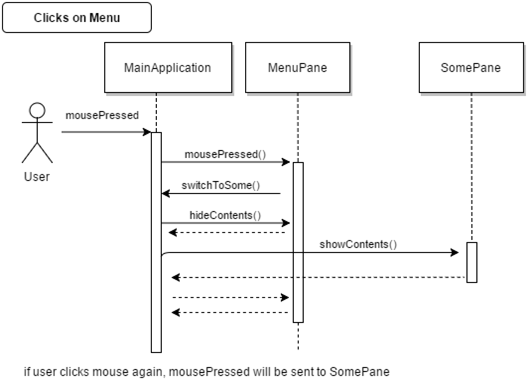
FIG 6.2 · the team’s sequence diagram for a menu click, one of the interactions the UML above describes
Commits, on the record.
22 of the team’s commits are mine, on the one shared main branch (55 · 34 · 27 · 22 across four contributors; verified with gh api repos/comp55/final-project-wumpus/contributors, 2026-09-25).
What I don’t claim.
No grade. That claim is dropped entirely, on this page and everywhere else.
No branching, pull-request or peer-review language: the repo has 0 pull requests and 1 branch: commit-and-push to main, not a reviewed workflow.
No line-by-line ownership beyond the file list above and the commit count; the other three contributors’ work isn’t itemized here.
The sprites above are the team’s own course-project art, not a live capture of the running game.